
What Changed When I Stopped Forcing Creativity
What Changes When I Stopped Forcing Creativity
by Jessie Jarvis
For most of my life, I told myself I wasn’t creative.
Not in the classic sense, anyway. I don’t draw. I don’t paint. I don’t engrave, braid, tool leather, or make things that belong on Pinterest. I have decent handwriting, but that’s about where my artistic résumé ends.
That story felt true for a long time.
Then, a fellow Be A Maker School instructor, Nicole Poyo, called me out on it. Gently, but clearly. She told me I was doing myself a disservice by saying I wasn’t creative. And the more I repeated it, the more my brain accepted it as fact. That stuck with me.
Because what we tell ourselves over time becomes the framework we operate inside of. And most of us are far more creative than we give ourselves credit for. We just define creativity too narrowly.
For some people, creativity looks artistic. Drawing, painting, building, making something tangible with their hands. For others, it looks like interior design, hosting, styling, or creating experiences that feel effortless and beautiful.
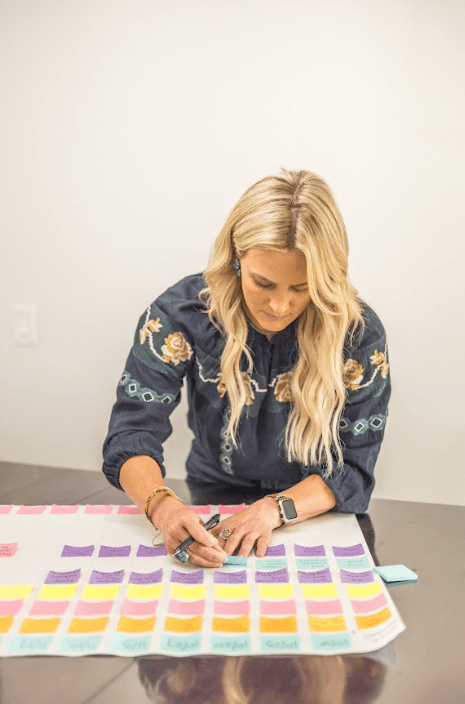
And then there are people like me. My creativity shows up in structure. In ideas. In systems. In business models, marketing strategies, and content plans, and in seeing how pieces fit together before anyone else notices they’re related. That is creativity too, even if it doesn’t come with paint under your fingernails.
Once I understood that, everything shifted.
MY CREATIVE BRAIN DOES NOT WORK ON DEMAND
Here’s the truth about how ideas work for me. When I actually need them, they do not show up.
My creative brain is basically an old 1800s water well. I walk out every morning with my bucket, put it under the spigot, and start pumping. Nothing happens. I pump harder. Still nothing. Days go by. Weeks go by. I keep pumping because surely effort alone will fix this.
It doesn’t.
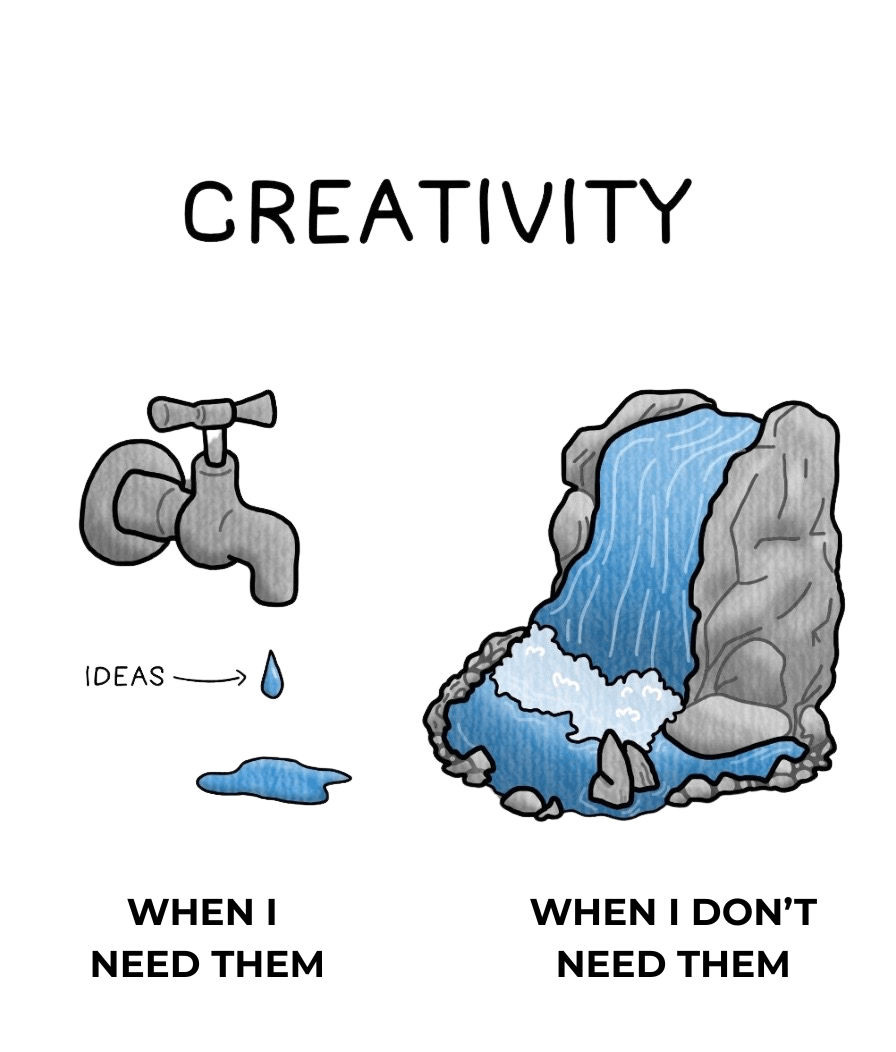
Then one random day, I walk out, barely touch the handle, and water comes rushing out like it’s been waiting for me. Within minutes, the bucket is full, and I’m scrambling to find anything else nearby that can hold ideas so they don’t spill everywhere.
That cycle used to frustrate me. Now I expect it. And that expectation changed how I work.
I PROTECT MY BEST CREATIVE TIME
My best thinking happens in the morning. For a long time, I gave that time away. I scheduled meetings in the morning so other people could get the best version of me. Then the afternoon would roll around, when my brain slows way down, and I would beat myself up for not being productive.
That was a me problem, not a discipline problem.
Now I do the opposite. I rarely take morning meetings. If I do, it’s only after I’ve already spent time on my own work. I put myself first on my calendar so that when I do show up for others, I’m not depleted. That one shift alone made me a better business owner.
I CHANGE THE ENVIRONMENT WITH THE ENERGY DROPS
I am not creative in the afternoon as long as I’m sitting at a desk. But if I’m outside, walking, in the yard, on the ranch, folding laundry, or physically moving, something switches back on. Ideas come. Connections form. Problems untangle themselves.
So instead of forcing myself to sit still and struggle, I build those activities into my day on purpose. That is not laziness. That is understanding how my brain works.
I BORROW CREATIVITY FROM OTHER PEOPLE
Here’s something funny about me. I always have great ideas for everyone else.
A friend can walk me through a problem in their business, and within minutes, I can see the solution clearly. When I’m stuck in my own creative drought, I’ll text a few friends and ask how things are going. Someone inevitably replies with a challenge they’re facing, and just like that, my creative muscle wakes up.
Seeing things through someone else’s perspective almost always helps me see my own situation more clearly. The lessons translate, even if the businesses look different on the surface.
I PRACTICE CREATIVITY WHERE THE STAKES ARE LOW
Another thing that’s helped me harness creativity is knowing where it shows up outside of business and intentionally leaning into those places.
For me, cooking is one of them.
I’m a good cook. I know my way around a kitchen, and I could easily get stuck making the same handful of meals every week because they work and everyone likes them. But I’ve learned that when I do that for too long, something feels flat.
So I try new recipes on purpose. Not because I need to become a chef or impress anyone, but because it exercises creativity in a way that feels safe. If a recipe flops, no big deal. If it’s great, we have a new favorite. Either way, my brain stays flexible. Curious. Willing to experiment.
The same thing applies to getting dressed.
The women reading this will understand. I know I can put together a solid outfit. I also know it’s easy to default to the same silhouettes, the same colors, the same combinations because they feel comfortable and familiar.
So I try new things there too. A different cut. A different color. Something slightly outside my usual box. Not because it’s about fashion, but because it’s about not letting myself get stuck. Those small, everyday choices keep me from becoming rigid, and that mindset carries over into my work whether I realize it or not.
Creativity doesn’t only live in big ideas or business strategy. Sometimes it shows up in dinner and denim.
And when you allow yourself to practice creativity in the places you already feel capable, it becomes much easier to access it in the places that feel heavier or more high-stakes.
I CAPTURE IDEAS INSTEAD OF TRUSTING MY MEMORY
The notes app on my phone is the most valuable app I own.
Anytime an idea shows up that I can’t use immediately, it goes there. Especially on the days when that creative well is overflowing. I have a running note literally titled “Great Ideas.” When I’m feeling dry or uninspired, I go back and scroll. Some ideas were ahead of their time. Some just needed the right season. None of them was wasted. Creativity isn’t about producing “new” constantly. It’s about honoring the cycles.
WHAT THIS REALLY COMES DOWN TO
Creativity didn’t increase for me when I tried harder. It increased when I stopped arguing with myself.
When you stop forcing creativity to look like something it’s not, and instead build your work around how it naturally shows up for you, things start to click. You become more confident. More consistent. Less frustrated. And ironically, more creative.
You don’t need to become someone else to be creative. You just need to understand how you work!
Subscribe To Be A Maker Mail!

